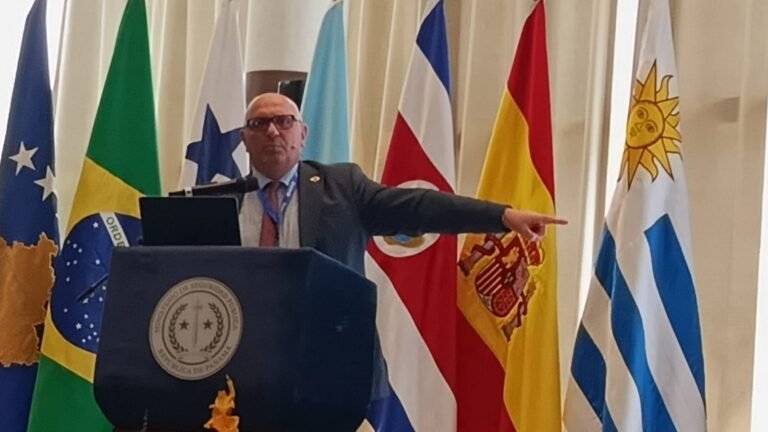
Prof.Ass.Dr.sc.Mensut Ademi Prof.Roberto Luis Gustavo GONZALEZ Prof.Ass,Dr.sc.Fadil Lekaj
Abstract
This paper analyzes the interactive relationship between the state, democracy, and global crime, focusing on the criminology analysis of criminal statistics (procedural and scientific doctrinal), and their interpretation in the modern context. The paper relies on quantitative and comparative methods to examine statistical data, using indicators such as the level of crime, the typology of criminal offenses and their evolution in time and space through early warning of criminal offenses. An essential component of the analysis is the construction of a “crime map,” which reflects the geographical distribution of crime and identifies high-risk areas, linking them to socio-economic, political and institutional factors. This approach allows for a deeper understanding of the territorial dynamics of crime and helps to guide preventive policies. We also address the global dimension of crime, including phenomena such as international trafficking, cybercrime and transnational criminal networks, which transcend national borders and challenge traditional control capacities. In this context, globalization is seen as a factor that, in addition to its positive effects, has contributed to the expansion and complexity of criminal activities on a global scale. In conclusion, the importance of integrating statistical analysis with theoretical approaches in criminology is emphasized to provide a more comprehensive understanding of crime in a globalized reality. The crime map serves as a strategic tool for decision-makers and security institutions in designing effective policies for preventing and combating crime. Keywords: Criminology, crime statistics, crime map, democracy, rule of law, organized crime, cybercrime, security policies.